
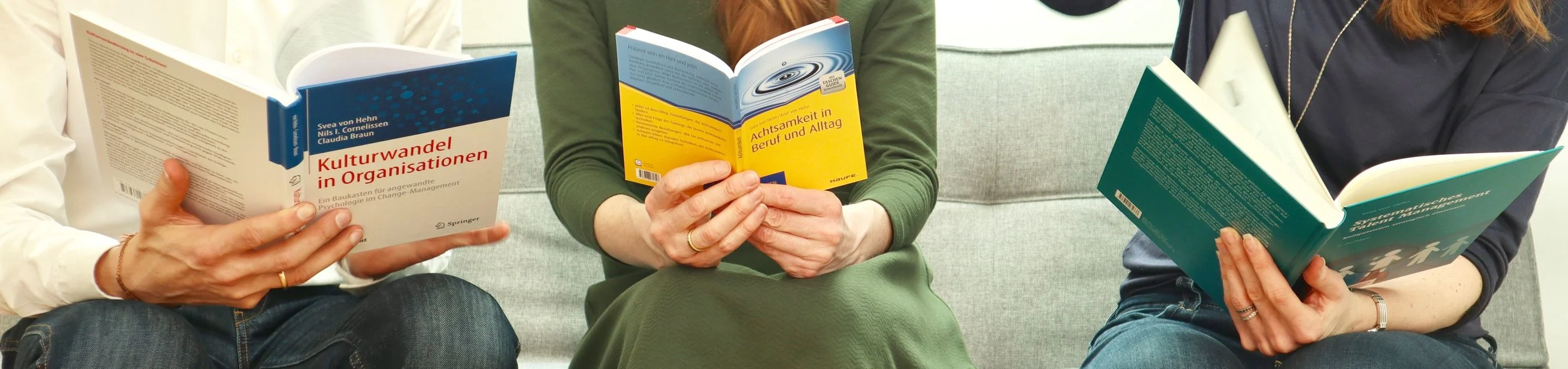
Publications
We are dealing with our topics in a practical and scientific way. Here you can find an overview of our books, scientific studies and articles in professional journals (all in German language).
Our Books
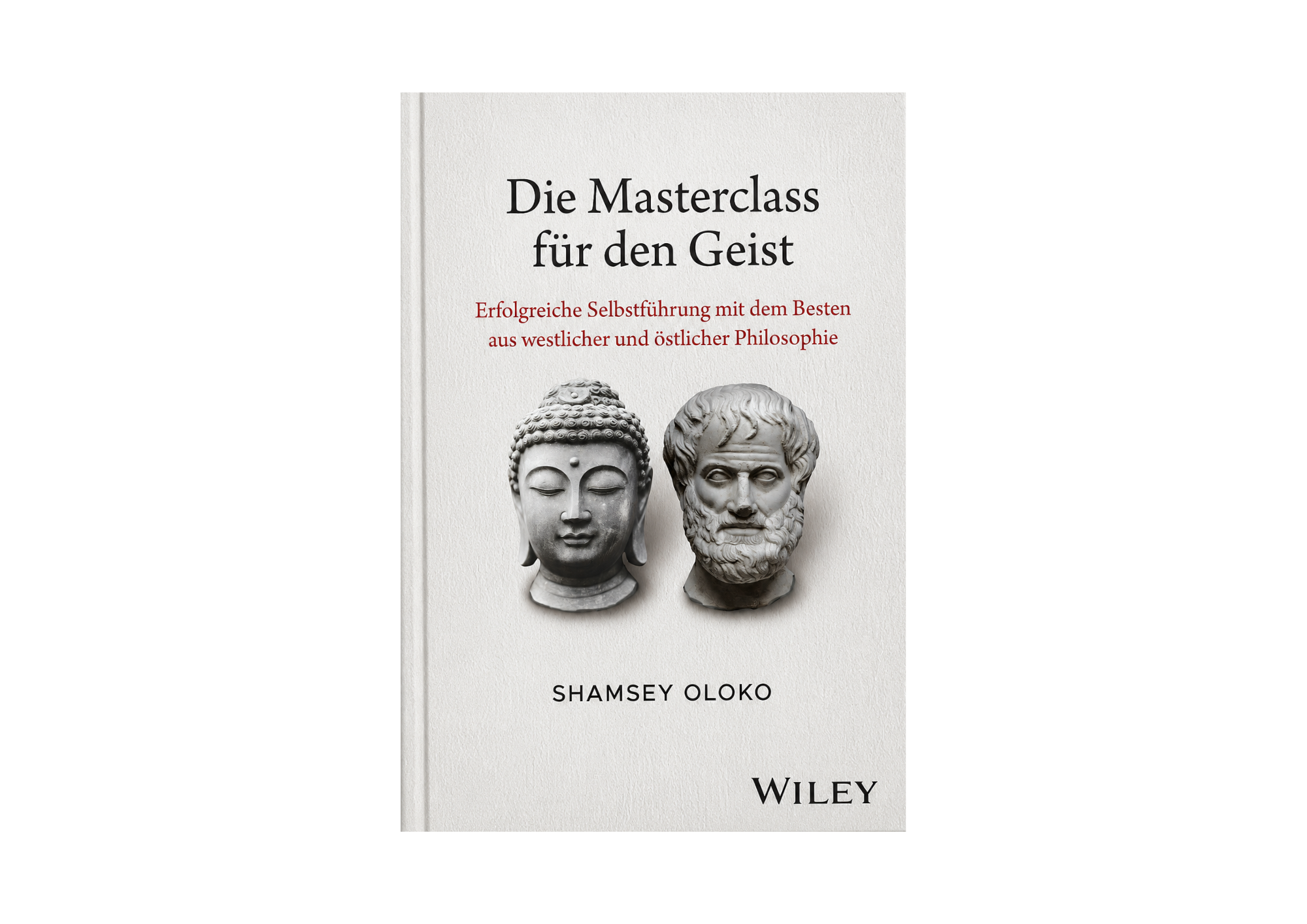
The Masterclass for the Mind
Oloko, S. (2026). Berlin: Wiley.
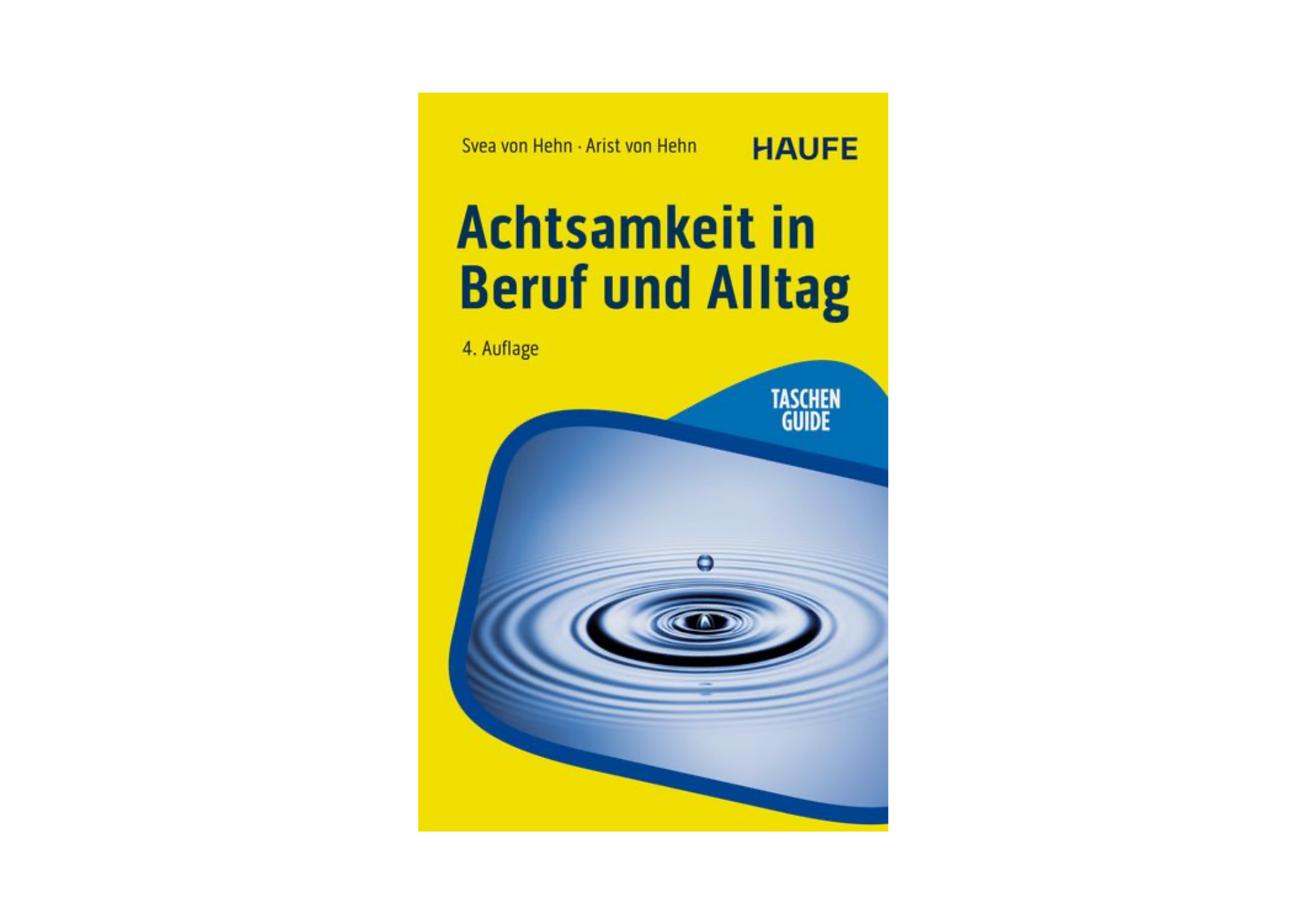
Mindfulness at Work and in Everyday Life
von Hehn, S.; von Hehn, A. (2015). 4th edition (2025). Freiburg: Haufe.
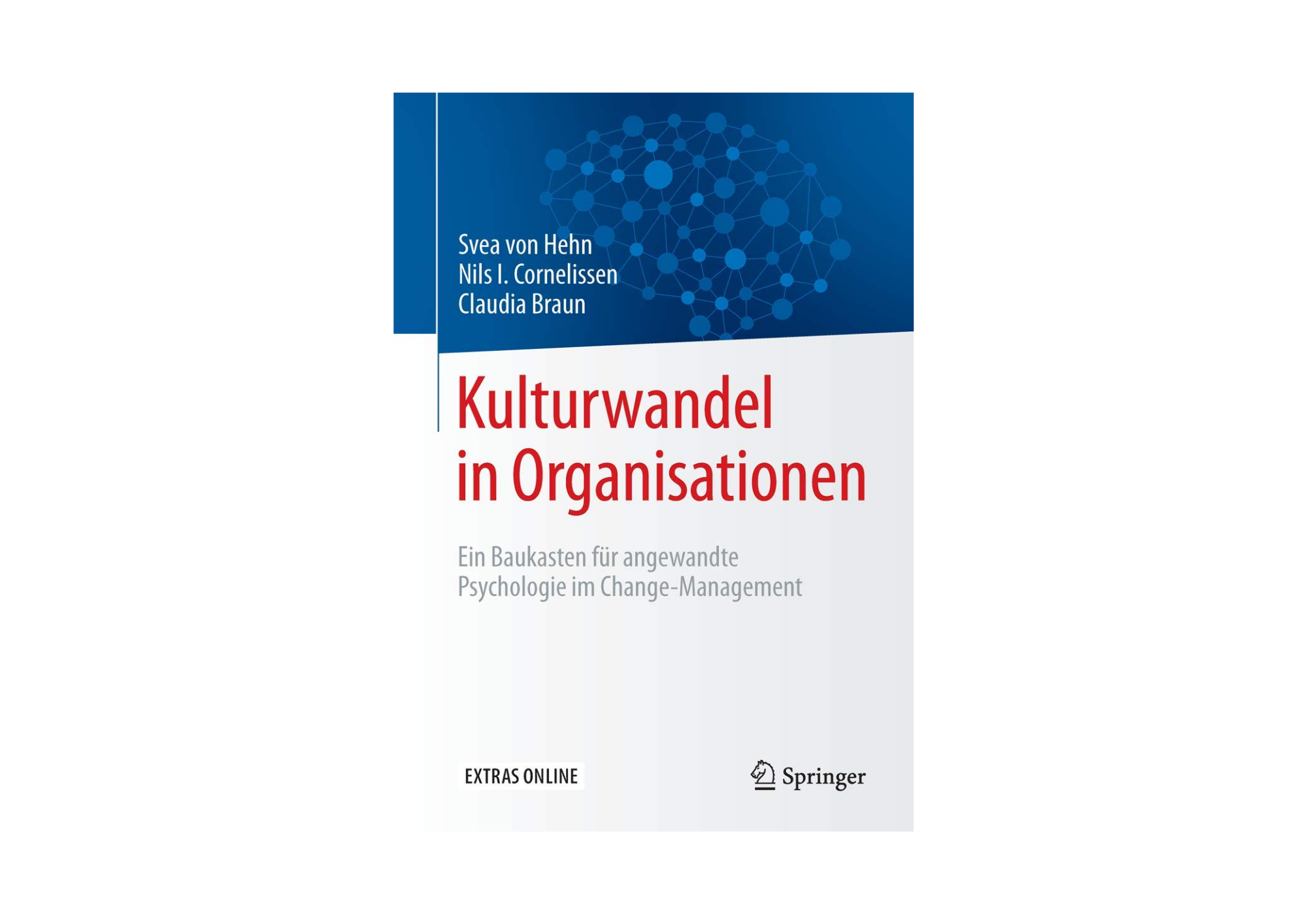
Cultural change in organizations
von Hehn, S.; Cornelissen, N. I.; Braun, C. (2015). 2nd edition (2021). Berlin/Heidelberg: Springer. German/English.
Mindfulness and Emotional Intelligence in Organizations
von Hehn, S. & Rauls, J. (2023). Freiburg: Haufe.
Systematic Talent Management
von Hehn, S. (2008). 2nd revised edition (2016). Stuttgart: Schäffer-Poeschel.
Psychology for Professional Life
Von der Linde, B.; von Hehn, S. (2009). Freiburg: Haufe.
Our Expert Articles
The Third Wave of Meditation Research: Insights for Self-Leadership and Leadership
Oloko, S.; von Hehn, S. (2026). In: Wirtschaftspsychologie aktuell.
Mindfulness and meditation are not only practical tools for reducing stress, but can also help leaders expand their leadership and self-management skills. What new questions and topics does the so-called third wave of meditation research raise, and what does this have to do with psychology? Read the full article (German only)
The Curse of Authenticity: When Leadership Slows Down AI Transformation – and What Helps
Hehn, S. von; Cornelissen, N. I.; Holzhaider, C. (2026). In: Personal Manager Österreich.
Anyone leading an AI transformation today knows: the technology is rarely the actual problem. That problem sits in the conference room. And sometimes at the head of the table. But AI transformation is not an IT project. It is also a cultural change – and that change fails or succeeds because of human factors. Read the full article
Critical Thinking – An Underrated Future Skill
Oloko, S.; von Hehn, S. (2026). In: Wirtschaftspsychologie aktuell (online).
Critical thinking is a crucial tool for making well-founded judgments and developing clear perspectives in our complex present. What defines critical thinking, what hinders it, and how can it be trained? An excursion into philosophical and psychological concepts provides answers. Read the full article
The Smarter the Technology, the More Important the Human
von Hehn, S.; Möller, M. (2025). In: Human Resources Manager (online).
AI makes organizations more efficient – but true leadership today demands more: creating meaning, emotional intelligence, presence, empathy, and judgment. Technology delivers data. Leaders make the difference. Read the full article
Mindfulness as a Leadership Competency
von Hehn, S.; Möller, M. (2025). In: Service Today, Issue 03/2025.
Customer expectations are rising, technologies are developing rapidly, and daily working life is characterized by a fast pace, uncertainty, and increasing complexity. The ability to lead oneself, to be present, to make clear decisions, and to build sustainable relationships is becoming a central resource – especially for leaders and employees in service-oriented industries and roles. Mindfulness is not a "wellness add-on" here, but a leadership meta-competency that strengthens service providers in their role – for themselves, their teams, and their customers. Read the full article
Viewpoint | Mindfulness: More Than Wellness
von Hehn, S. & Oloko, S. (2024). In: Personalwirtschaft, Issue 09/2024.
The boom has led to a proliferation of offerings that have at times heavily diluted the original purpose of mindfulness. To ensure that mindfulness does not become arbitrary and, in the worst case, ineffective – but instead can unlock the potential for emotionally intelligent leadership – clarity in its application is needed. Read the full article
Training Your Own Mind with Mindful Leadership
Oloko, S.; von Hehn, S. (2023). In: WIRTSCHAFTSPSYCHOLOGIE aktuell, Issue 2/2023 (pp. 20–25).
Mindfulness works – research and practice prove it. But this technique is not a cure-all, even if the hype surrounding it sometimes raises great expectations. Mindful Leadership, by contrast, offers a serious approach to systematically training a mindful attitude. Through it, leaders find their way to clarity, connectedness, and composure. Read the full article
Shaping the Organizational Culture of the Future with Mindfulness and Emotional Intelligence
v. Hehn, S. & Rauls, J. (2023). In: Frankly – The Fulbright Alumni e.V. Magazine, Issue 2023.
Due to its proven stress-reducing effects, mindfulness is sometimes misunderstood as a kind of "optimization tool" within a performance-driven society. However, it is more sustainable to consider individuals systemically within the organization and to establish mindfulness and emotional intelligence following a holistic approach, both within teams and in the culture. This approach has a range of positive effects, as demonstrated by scientific studies. Read the full article
Successfully Implementing Change Processes with the I-SNAP-I Model
Hehn, S. von, Leßmeister, T. & Schmökel, Y. (2022). In: WIRTSCHAFTSPSYCHOLOGIE Aktuell (online).
"How can we shape change successfully?" – Only 31% of change programs succeed. In WIRTSCHAFTSPSYCHOLOGIE aktuell, Svea von Hehn, Tobias Leßmeister, and Ylva Schmökel describe how to address this at the level of concrete behavior, offering practical tips and techniques: with a narrative that generates enthusiasm in the "engine room," as well as strong multipliers acting as megaphones and microphones within the organization. Read the full article
A Change Backlog in the Public Sector?
von Hehn, S. & Kübart, A. (2022). In: wissensmanagement, Issue 7/2022.
On key questions for the future such as digitalization and climate change, the public sector is being called upon as rarely before. In practice, however, the public sector lags noticeably behind the private sector. Change seems to progress only sluggishly here. The perspective of behavioral economics, by contrast, opens up a different vantage point – it focuses on the importance of framework conditions and derives pragmatic, proven measures. Read the full article
Serving on Supervisory Boards with Brains
von Hehn, S. (2022). In: Aufsichtsrat aktuell, Issue 04/2022.
At the FORUM AUFSICHTSRAT hosted by BOARD SEARCH in May 2022, Dr. Svea von Hehn was the guest speaker before more than 130 select guests from Austria, Germany, Switzerland, and Sweden, addressing the topic "What is your brain doing while you work?" In conversation with Dr. Josef Fritz, managing partner of BOARD SEARCH, she offered insights into our brains – tailored in particular to managers and supervisory board members – and gave advice on how to work with greater focus, less exhaustion, and better performance; how to deal with uncertainty, both individually and as a team; why mindfulness is beneficial; what matters in cultural change; and why companies led with emotional intelligence will be the model of the future. Read the full article
Mindfulness: How to Create a Culture Where People Enjoy Working
Rauls, J., & von Hehn, S. (2021). In: personal manager, 4/2021.
So how can companies shape their corporate culture with the help of mindfulness in a way that fosters emotional intelligence within their organizations? This is achieved by positively influencing the four determinants of corporate culture: wanting, being able, being allowed, and being obliged.
Mindfulness and Its Role in the Working World 4.0
Rauls, J., & von Hehn, S. (2021). In: Wissensmanagement, 2/2021.
Mindfulness has been taken off the "eco shelf" and has developed into a societal trend. One of the largest current studies on mindfulness in companies is investigating the effects of mindfulness in the workplace. The results so far demonstrate that, especially in times of crisis, mindfulness is regarded as an effective tool – both for individual health and for leadership style and collaboration. Read the full article
Collaboration in Times of Social Distance
von Hehn, S.; Rauls, J. (2021), In: CreatingCorporateCultures; Bertelsmann Stiftung, 5/2021.
How we stay connected with ourselves and others through mindfulness: When working from home, you are not only exposed to more distractions – there is usually also a lack of space for personal interaction. Mindfulness techniques can help counteract these challenges. Read the full article
Reactive vs. Creative
Cornelissen, N. (2020). In: A Transformative Edge. Knowledge, Inspiration and Experiences for Educators of Adults – a compendium for practitioners in adult education, with more than 40 contributions from experts in transformative learning.
There are tons of great tools and interventions out there for transformations and transformative learning, but their success depends – in my experience – on the mental state of the person applying these tools and the mental states of the relevant stakeholders. And even though we are all endlessly complex, to (over)simplify things we can reduce our inner states to two poles: reactive versus creative. Read the full article
Can Mindfulness Be Measured?
Braun, C.; Hölzl, B. (2017). In: moment by moment, 3/2017.
What does mindfulness really achieve? What scientific studies already exist, and what do they show? Britta Hölzel and Claudia Braun give us an insight into the current state of research. In doing so, one thing becomes clear: the first positive findings on the effects of mindfulness align very well with today's challenges in the working world. Read the full article
Middling Maturity
von Hehn, S.; Cornelissen, N. I.; Braun, C. (2014). In cooperation with Hochschule Fresenius Köln, Personalwirtschaft, 07/2014.
That talents come across as immature at the start of their careers is forgivable. It becomes critical when the talent management itself is immature. A recent study examined the maturity level of talent management in large corporations: often, there is room for improvement. Read the full article
A Good Strategy Knows No Bad Times: Why Talent Management Is Important Precisely in Times of Crisis
Heidegger, H., Komm, A., von Hehn, S. (2010). In: K. Schwuchow (Ed.), Cologne: Luchterhand.
Positioning HR: The Hour of the Strategists
Heidegger, H., Komm, A., Cornelissen, N. (2010). Personalwirtschaft, 11/2010.
How Leadership Development Works
Komm, A., Putzer, L., Cornelissen, N. (2007). In: Harvard Business Manager, 06/2007.
An international survey reveals the biggest obstacles to effective talent management. Three key recommendations help top managers discover and develop promising employees within their own companies. Link to the article (behind the paywall)
Personality Testing and Automated Counseling on the Internet
Montel, C., Debo, S.; von Hehn, S. (2005). In: Karl-Heinz Renner, Astrid Schütz & Franz Machilek (Eds.), Internet und Persönlichkeit (pp. 284–297). Göttingen: Hogrefe.
This volume presents the topic of the internet and personality comprehensively for the first time. Its aim is to show that psychological internet research can benefit when personality differences are taken into account more fully than they have been to date. Almost all questions concerning the internet that have so far been addressed primarily from social and applied psychological perspectives can, in fact, also be examined in relation to personality traits. More information (out of print)
Our Studies
Scientific Study: Mindfulness in the Work Context (2025)
Dr. Svea von Hehn in cooperation with Prof. Dr. Hannah Möltner (FOM University of Applied Sciences for Economics & Management) and Johanna Rauls (Federal Institute for Occupational Safety and Health), in: Wirtschaftspsychologie, Issue 2/2025.
Dr. Svea von Hehn contributed to an empirical study on the effects of mindfulness-based interventions. The aim of the research was to investigate the effectiveness of various formats – in-person training, app-based exercises, and webinars – in a corporate context. The study examined their influence on mindfulness, well-being, and emotional exhaustion among working professionals. You can find the link to the study here
Mindfulness Study at a Company in the Tech Sector (2020)
Together with Hannah Möltner, Professor of Business Psychology (University of Applied Sciences for Economics and Management), and Prof. Johannes Michalak (Witten/Herdecke University) – two leading experts in the field of mindfulness – we conducted a study on mindfulness in 2020 with more than 300 participants at an international tech corporation. The study evaluated the effects of mindfulness in general, as well as of our mindfulness program MOMENTUM in particular. You can find more information about the study here
Talent Management – Where Do Germany's Top Law Firms Stand Today? (2017)
13 HR professionals and 5 partners from a total of 14 top law firms took part in the survey, which consisted of questionnaires and interviews. The methodology is based on our study in cooperation with Hochschule Fresenius in Cologne.
The study is repeated at irregular intervals. If you are interested, we would be happy to send you the results from September 2017. Please email: info@returnonmeaning.com
Talent Management in Practice and Talent Management Profiler (2012/2013)
In cooperation with Prof. Dr. Stulle and Hochschule Fresenius Köln, we conducted two studies in 2012/2013: "Talent Management in Practice" (focusing on software support for HR) and "Talent Management Profiler" (detailed information on strategy, culture, and processes). The results are based on responses from numerous DAX-listed and large companies. We would be happy to send you the results if you are interested; please contact info@returnonmeaning.com