
Our first CO₂ inventory for 2023: results, insights, and outlook
RETURN ON MEANING prepared its first CO₂ inventory for the year 2023. Since then, we have continued the inventory process on an annual basis and have continuously refined our approach.
Transparency is central to us. It provides the foundation for open exchange with other organizations, our clients, and the public. For this reason, we openly share our results, our methodology, and the conclusions we have drawn from them.
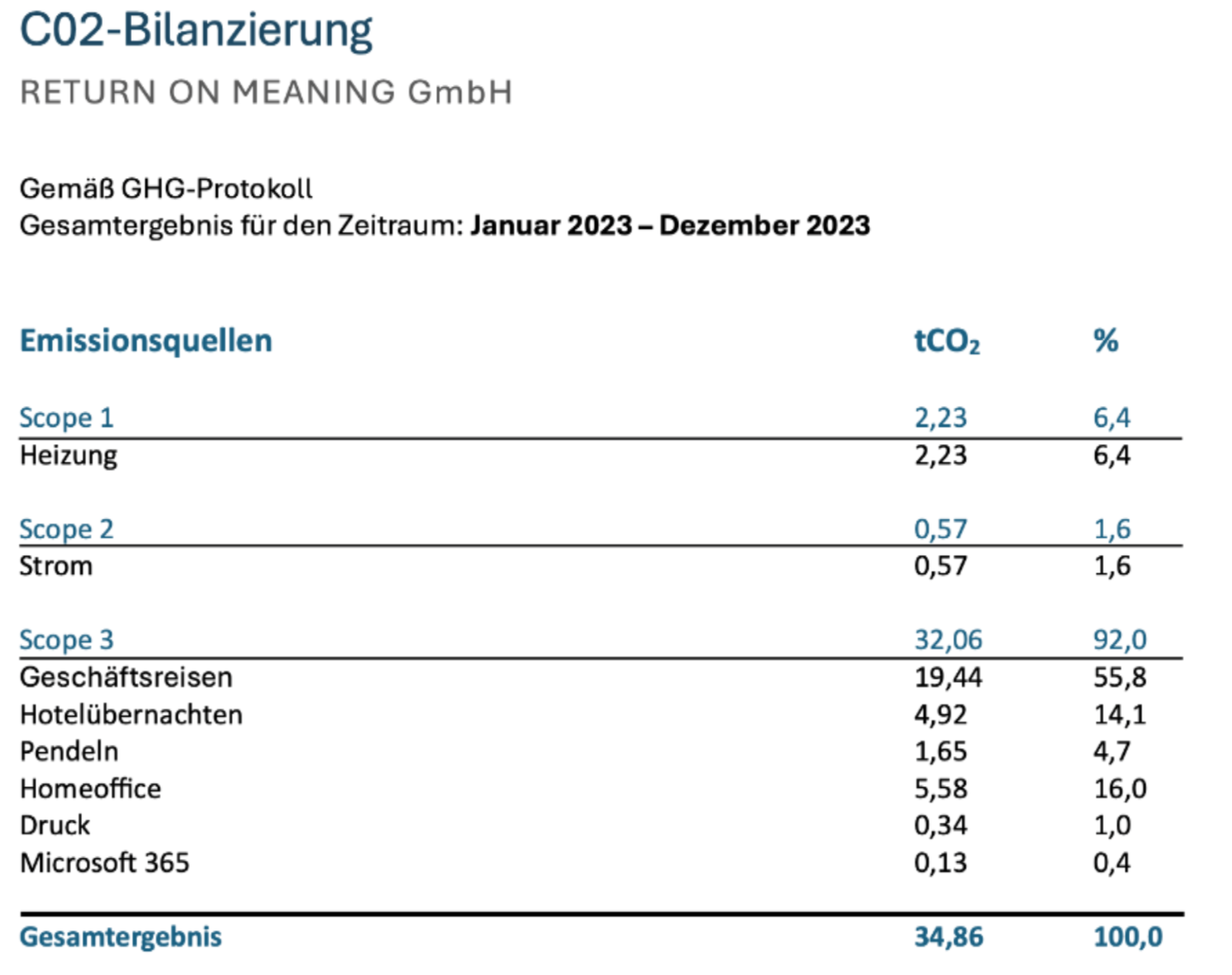
Brief explanation: Scope 1, 2 and 3
In carbon accounting, emissions are divided into three categories, known as scopes:
Scope 1: Direct emissions, for example from company vehicles or heating systems.
Scope 2: Indirect emissions from purchased energy, for example electricity or district heating.
Scope 3: Emissions across the upstream and downstream value chain, for example business travel, purchased goods and services, or employee commuting.
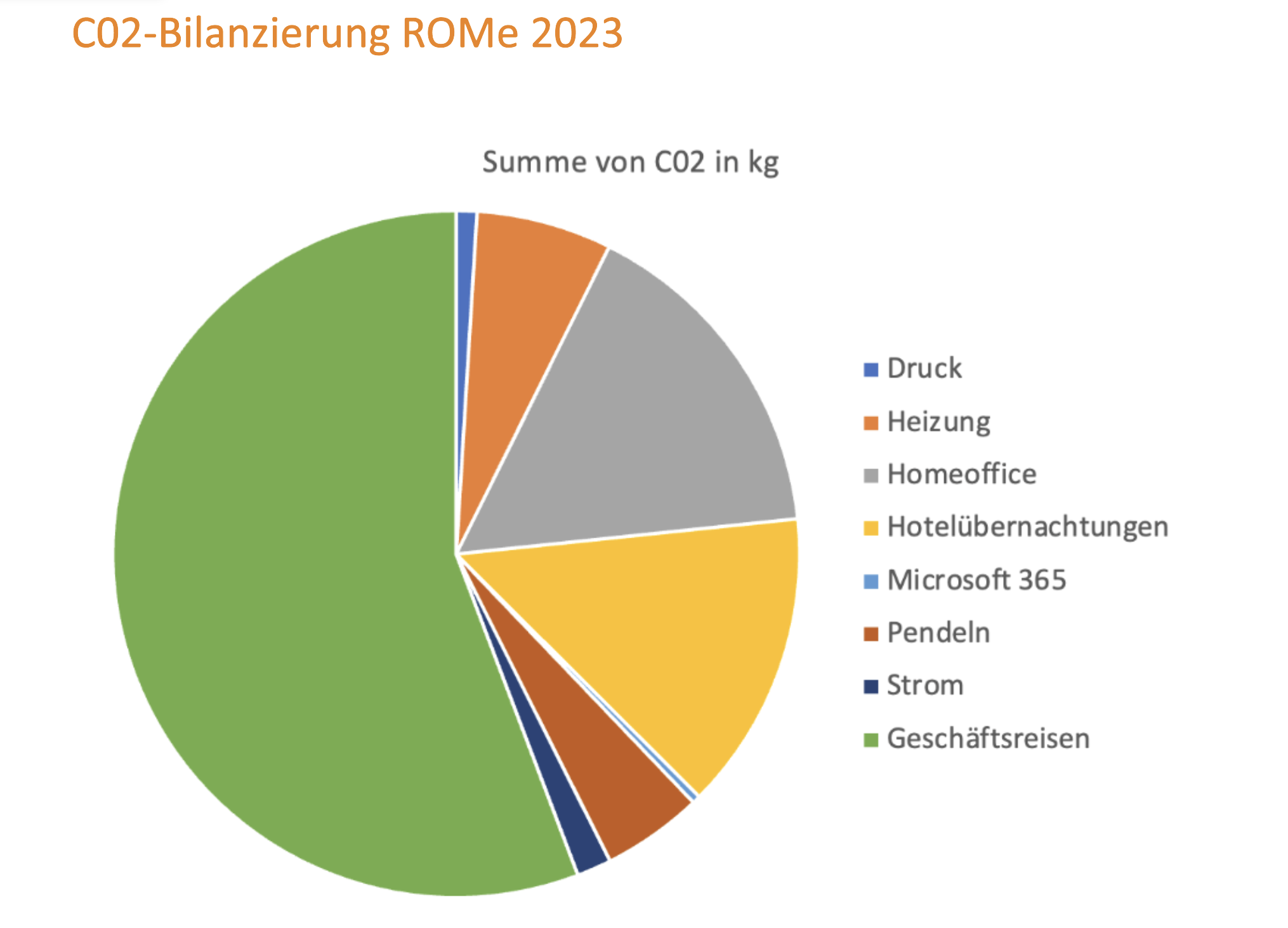
A look at the pie chart:
Where do most emissions occur?
Our analysis shows clearly:
Business travel is by far our largest source of emissions.
Significant shares also come from working from home and hotel stays.
Less relevant are areas such as electricity for our office, printed materials for our workshops, or our cloud services provided by Microsoft.
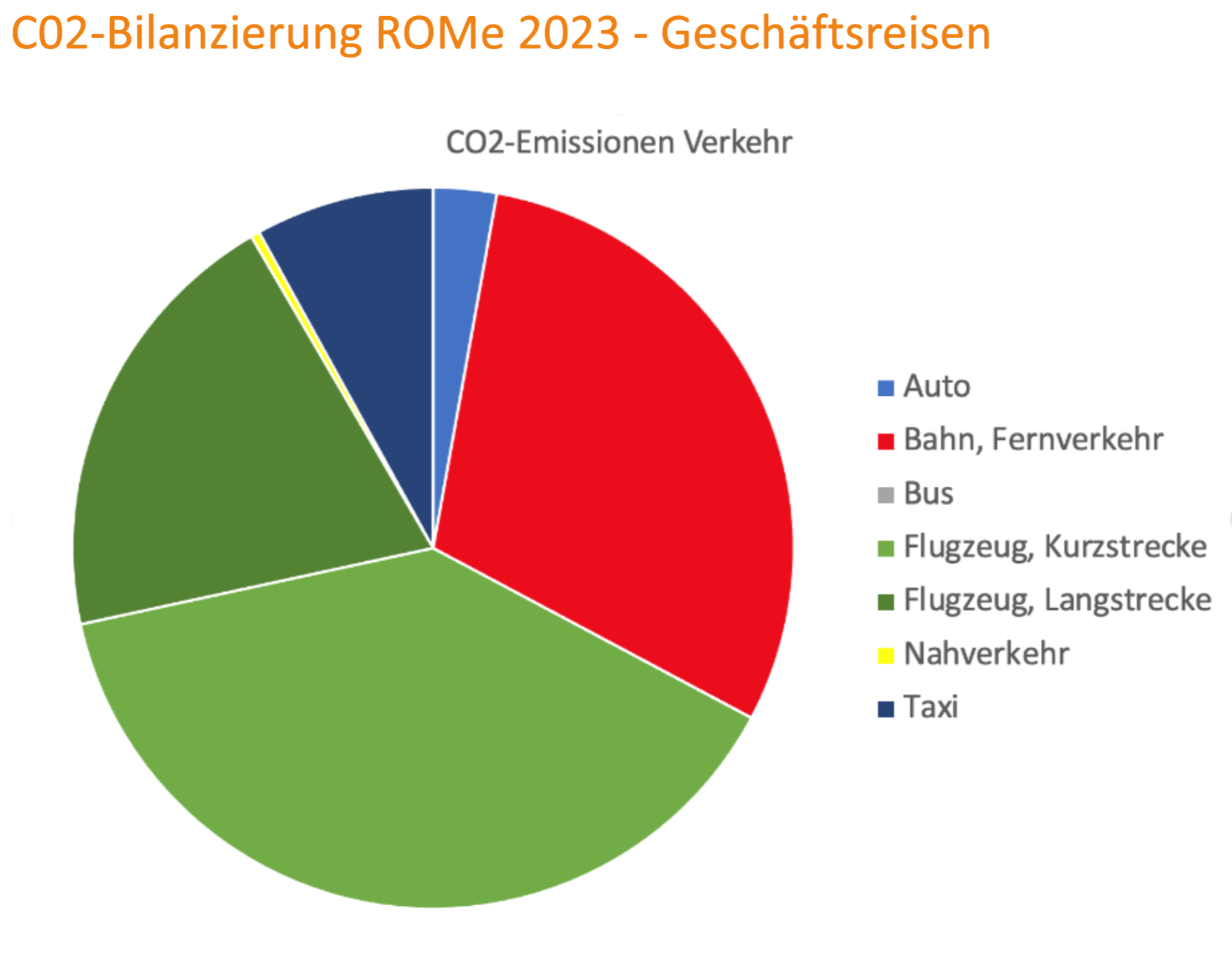
Focus on business travel
If we look more closely at business travel, nearly two thirds of emissions come from flights, even though we make significantly more journeys by train. Why is that?
A single flight generates around 13 times the emissions of a train journey in our case.
One point is particularly important here: long distance flights are a major factor.
To put this into perspective, we did not take any flights outside Europe in 2023. However, a return trip from Berlin to New York in business class would have caused around 9.2 tonnes of CO₂, almost half of our total business travel emissions.
What do we conclude from this?
We know that, in order to do our job well and bring meaning into the world of work, we want to be on site with our clients. Avoiding travel altogether is therefore not our goal. Nevertheless, we ask ourselves: how can we make these journeys more sustainable?
So far, we have already found several answers to this question:
Regional setup: We work with permanent and freelance colleagues not only in Berlin, but also in other cities such as Stuttgart and Vienna. This allows us to avoid long journeys while still being present directly with our clients.
No flight policy: We do not take domestic flights.
No intercontinental air travel: We have declined several projects that would have required an intercontinental flight.
Train as the preferred means of transport: Whenever possible, we always travel by train.
We now intend to continue implementing and further expanding these measures in order to improve continuously in this area.
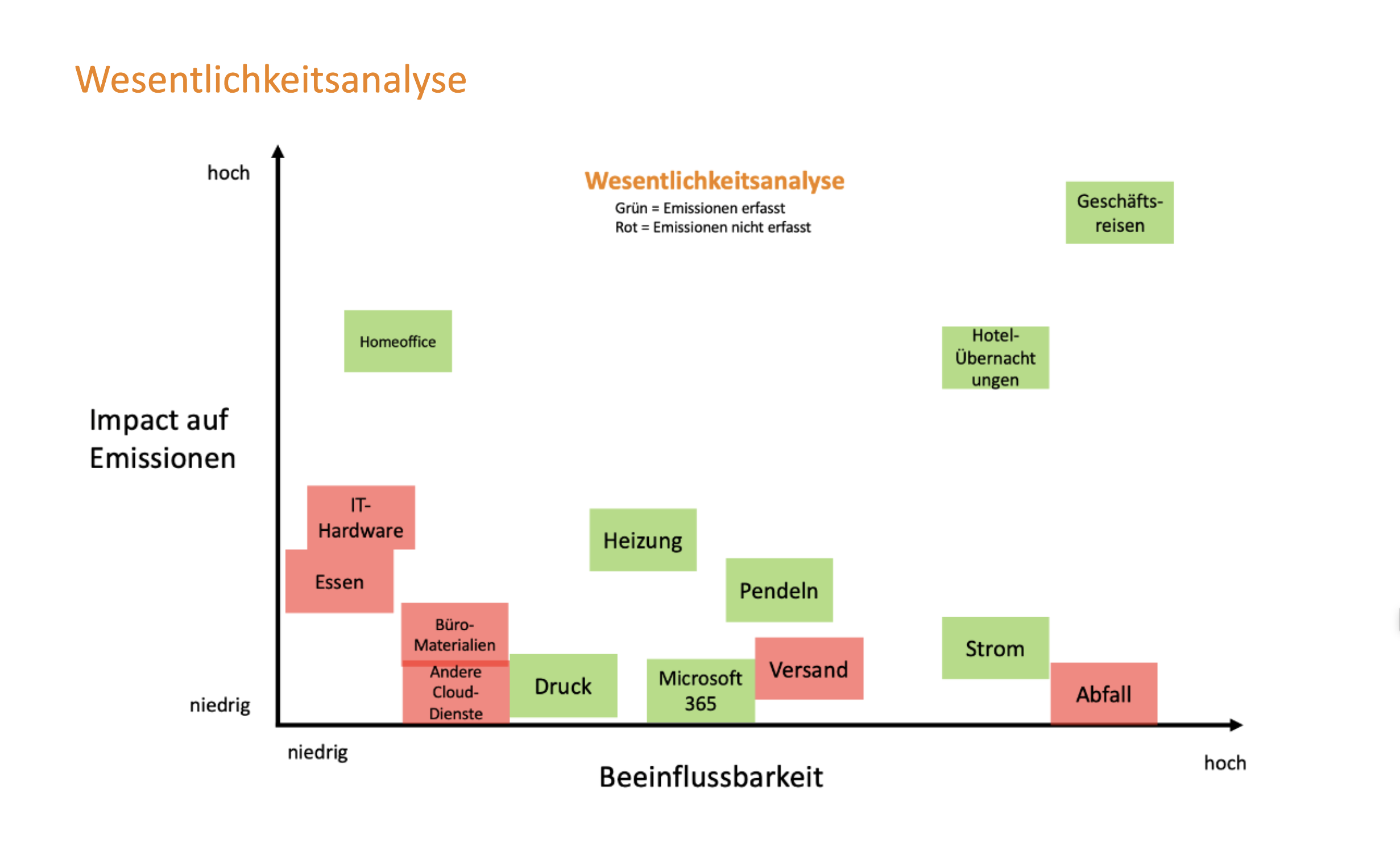
Materiality analysis:
Emission sources differ in terms of their relevance to the overall inventory. While Scope 1 and Scope 2 must be recorded, Scope 3 is guided by the principle of materiality.
This means that individual Scope 3 emissions may be excluded if their influence on the overall inventory is very small, if the company has little control over them, or if reliable data collection would only be possible with disproportionate effort.
Excluding such sources is therefore not arbitrary, but based on a reasoned assessment of relevance, influence, and data availability.
One example is catering at team events or in the office. Emissions also arise in this area. However, employees would eat at home or elsewhere regardless.
Since the provision of food does not create additional emissions in the sense of actual increased consumption, but rather represents a shift, this area is not included in the inventory.
In our materiality analysis, we therefore categorized various emission sources according to their degree of controllability and their impact on our overall results. At the same time, we marked which sources we already record and which we have deliberately not included
Conclusion and outlook:
Our first CO₂ inventory has provided important insights and created a robust data foundation. On this basis, we are now able to make more informed decisions regarding emissions and reduction potential. Our first inventory year continues to serve as a reference point against which we measure our progress.
Our goal remains clear: we want to reduce our total emissions by 10 percent each year and offset emissions from Scope 1 and Scope 2.
With the structures now in place, the effort required for future inventories has been significantly reduced. Data collection is more consistent, processes are established, and analyses can be carried out more efficiently.
If you have ideas for further developing our approach or would like to exchange views on this topic, we would be pleased to hear from you at nachhaltigkeit@returnonmeaning.com.
We look forward to the exchange and to creating further momentum together for a more sustainable future